Google's 'CC' household agent is a permissions problem in a trench coat
Google Labs quietly turned its CC agent into something more interesting than the headlines suggest. CC already existed as a personal “get ahead of your day” thing that rolled into the Gemini app as Daily Brief, but this week it became an agent for whole families and households. It spins up its own Google account — its own identity, its own permission boundaries — and lets up to six people feed it emails from the school, the swim center, the vet, and turn the mess into one shared “Day Ahead” brief, a family calendar, and a task list. On paper that's a productivity feature. In practice it's Google running a real experiment in shared state, which is the exact problem the whole “personal AI assistant” race keeps quietly running away from.
Because here's the thing nobody in the agent hype cycle is handling well: the moment you point an autonomous agent at more than one person, the hard problem stops being the model and becomes the permissions. A personal agent that reads only your inbox is a toy with a blast radius of one. A household agent that can see the kids' school emails, the parents' paperwork, and the in-laws' shared calendar is suddenly a trust surface with six different owners. Google's answer — each member decides what CC gets to see, and CC operates out of its own account rather than riding on any one person's credentials — is the first time I've seen a major vendor actually build the access-control layer instead of hand-waving past it. That's the part a sysadmin appreciates, and the part most “agentic AI” demos just skip. It's also the part that changes the security story: when the agent can act on a shared task list, a wrong or over-broad grant isn't a privacy papercut, it's the agent filling out the wrong form or rescheduling the wrong person's afternoon. The model can be brilliant; the access graph is where the real incident would live.
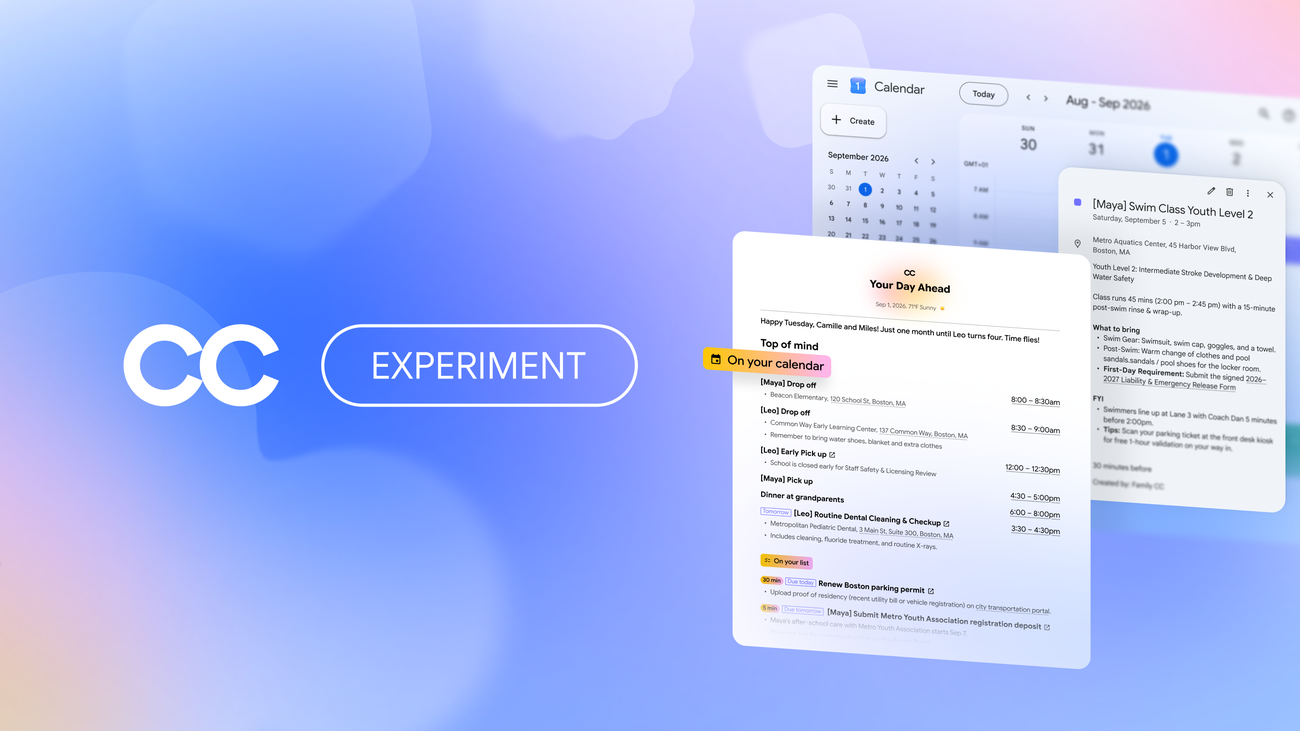
Is it useful? For a household drowning in the mental load of “who's doing what and when,” sure — offloading the coordination is the whole pitch, and the per-member opt-in is what keeps that pitch from feeling like a spyware pitch. But it's still experimental, still U.S.-only behind a waitlist, and the permissions model is only as good as the defaults it ships with and how carefully it handles the member who owns the school account versus the one who shouldn't have it. The interesting question was never whether the AI can plan a family dinner. It's whether anyone's actually going to sit down and configure who sees what in a household with a teenager, a parent on a work email, and a kid with an account of their own. When you've got that many principals in the room, who do you let write the ACLs?

Sources

Comments
Post a Comment