The Prerequisite for Agentic AI: Moving Beyond Dashboards to Intelligence Systems
We’ve all been there: a dashboard turns red, an alert fires, and a dozen different teams start frantically trying to reconstruct the same story from twelve different telemetry streams. It’s the classic 'comprehension problem' of hyperscale cloud operations. Microsoft’s recent reveal of 'Brain'—their centralized AIOps system for Azure—actually hits on a nuance most people miss when they talk about AI automation. It isn't just about adding a chatbot to your monitoring stack; it’s about moving from a collection of fragmented dashboards to a single, coherent 'digital twin' of the entire platform's health.
The real takeaway here isn't just that Azure is using AI to spot outages. It's the architectural argument Mark Russinovich is making: you cannot have reliable agentic AI without a shared, unified model of reality first. If your agents are reasoning from different, disconnected data points, you don't get automation—you get a federation of confident systems that all disagree with each other in production. Brain acts as that unified layer, sitting on top of the Azure Resource Graph to fuse telemetry, service dependencies, and even customer impact into a single vocabulary of health. When Brain says a service is degrading, it’s not just a threshold being crossed; it’s a determination made by reasoning across topology and historical patterns simultaneously.
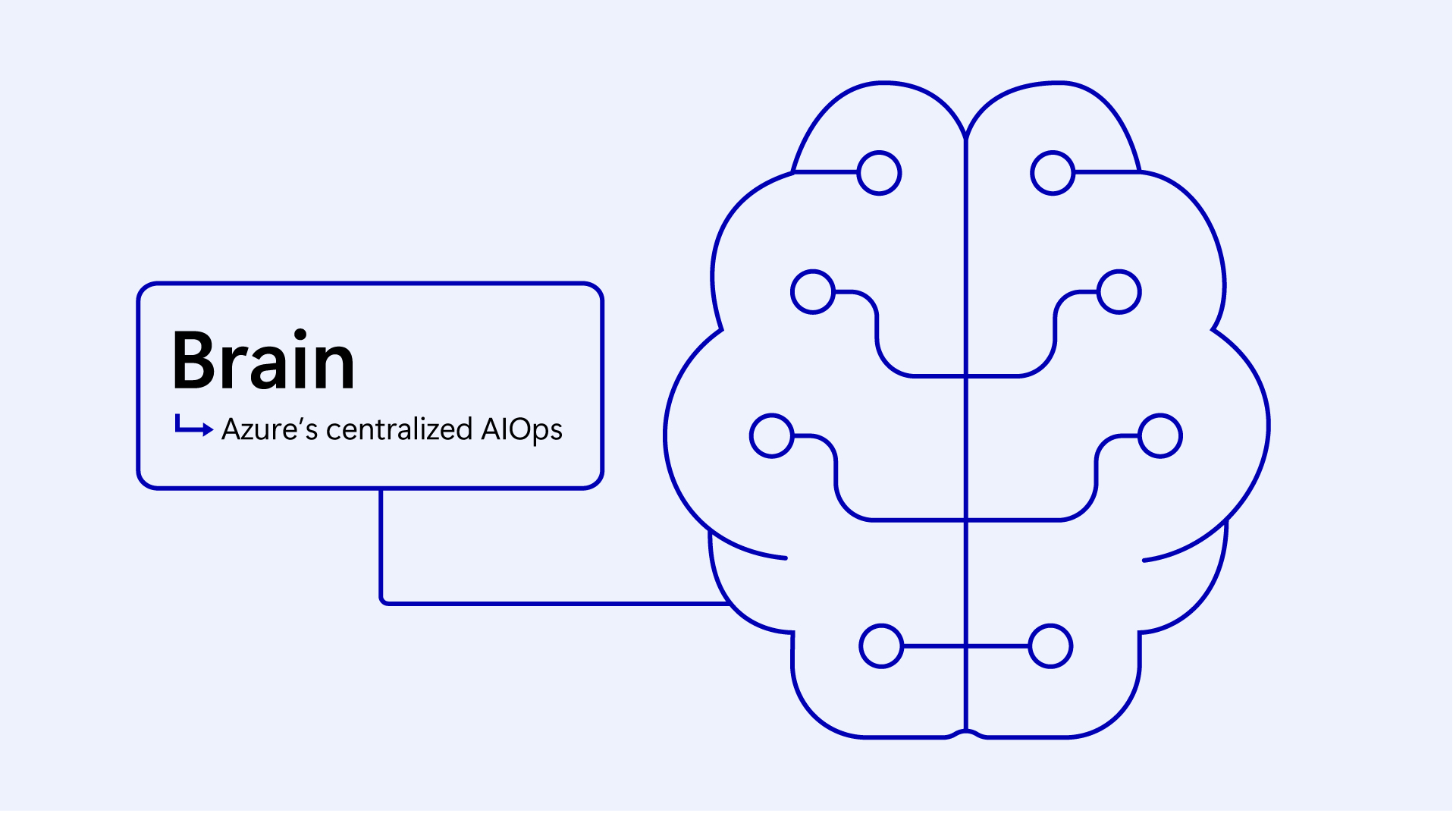
This shift from 'observing' to 'reasoning' is the quiet prerequisite for the agentic era. We spend so much time talking about what agents can *do*—the actions, the rollbacks, the auto-remediation—that we forget they need so

If you're building or deploying agentic workflows today, are you actually giving them a unified state to reason from, or are you just handing them a collection of high-speed, disconnected sensors and hoping for the best?
Sources

Comments
Post a Comment